Gamification
& The Dark Arts
How games shape motivation, and how products borrow the same tricks.
VIDEO
The gamer’s slot machine
03
Before apps: loyalty and status
08
Dark patterns and biases
Press start
By the end of today, you’ll be able to…
Explain why games motivate us
Intrinsic and extrinsic motivation, player types and flow.
Analyse any product
Map its mechanics onto the eight Octalysis core drives.
Spot the Dark Arts
Reinforcement schedules, cognitive biases and dark patterns.
Use it responsibly
Apply these ideas outside games: in your work, projects and habits.
Press start
Gamification ≠ games
“Gamification is the craft of deriving all the fun and engaging elements found in games and applying them to real-world or productive activities.”
A “human-focused design” process that optimises human motivation in a system, as opposed to pure efficiency.
Yu-kai Chou, Actionable Gamification
Why we play
Two kinds of motivation
Intrinsic
Comes from within: interest, values, enjoyment.
Self-sustaining and linked to creativity, exploration and deeper engagement.
Slower to build and harder to trigger at first.
Extrinsic
Comes from outside: money, trophies, recognition.
Fast, but often temporary. It fades when the rewards stop.
Risk: overjustification. Too many rewards can kill the fun.
Self-Determination Theory: we stay motivated when we feel autonomy, competence and relatedness.
Why we play
Not everyone plays for the same reason
Mastery
Achiever
Wants to learn, improve and beat challenges.
Autonomy
Free Spirit
Wants to explore and create freely.
Relatedness
Socialiser
Wants to connect and belong.
Purpose
Philanthropist
Wants to help others, with no reward needed.
Rewards
Player
Will do what it takes to earn the prize.
Change
Disruptor
Tests the system’s limits, for better or worse.
Hexad player types: Andrzej Marczewski (2015)
Why we play
Why kids say they play
A survey of 1,254 students aged 12–14 in South Carolina and Pennsylvania.
Source: Olson, C. K. (2010). Review of General Psychology, 14(2), 180–187
Why we play
Flow: between anxiety and boredom
04
Challenge grows with skill
ANXIETY
BOREDOM
Skill
Challenge ↑
FLOW
Mihaly Csikszentmihalyi, Flow: The Psychology of Optimal Experience (1990)
Before apps
Loyalty programmes were the first gamification
1800s
Cities grow
Local merchants compete to keep regular customers.
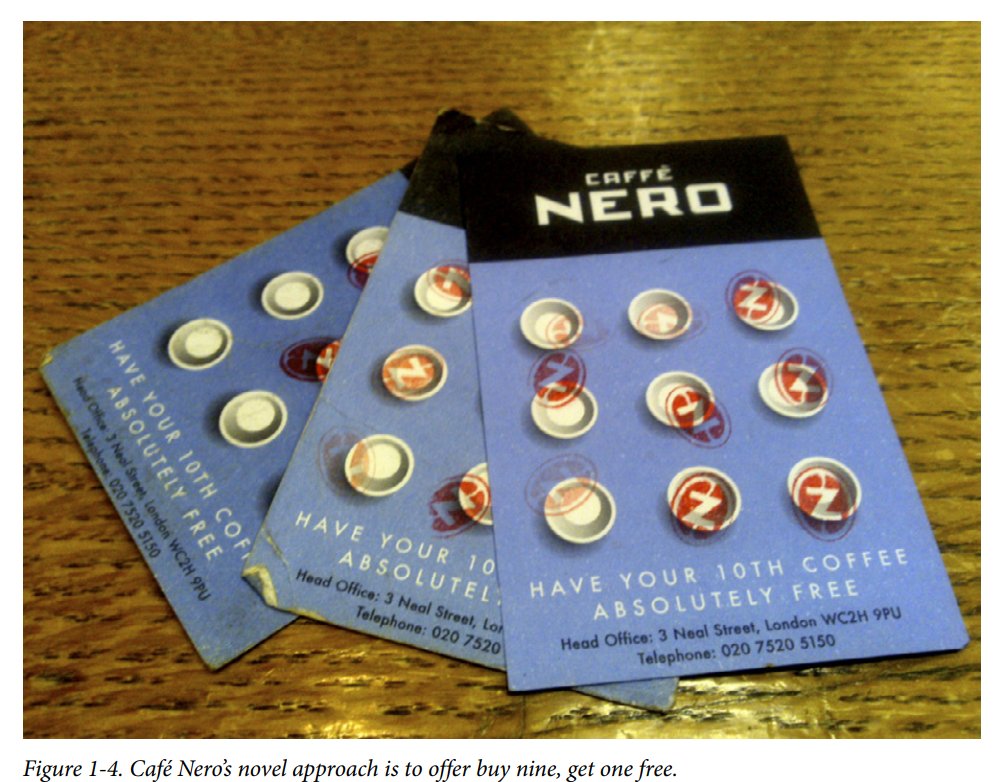
Punch cards
Buy 10, get 1 free
A simple 10:1 ratio that is still everywhere today.
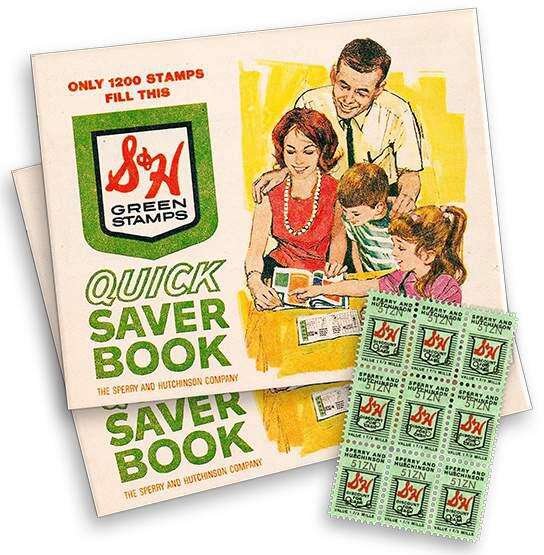
Trading stamps
S&H Green Stamps
Collect stamps, fill books, trade them for goods: a virtual currency.
What it did to us
Collecting for its own sake
Over-reliance on discounts
Loss of value awareness
Before apps
Then status beat free stuff
1981
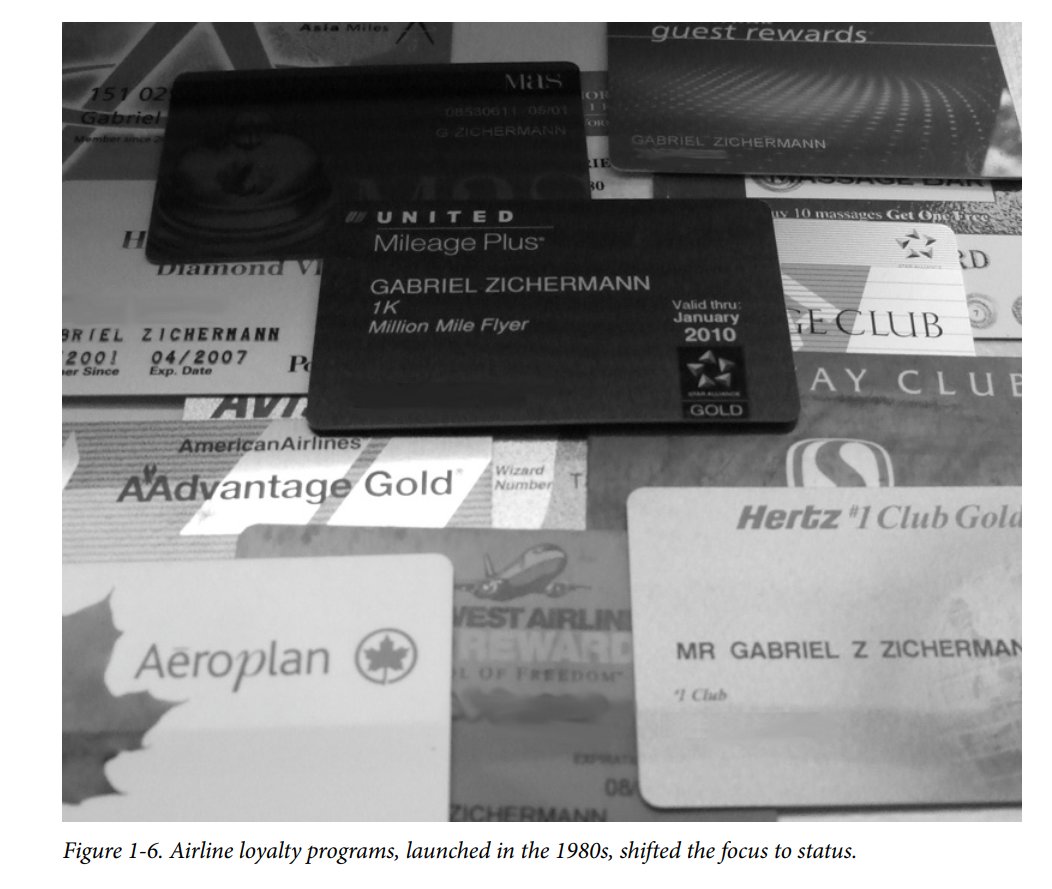
American Airlines launches AAdvantage, the first big frequent-flyer programme. United and TWA follow.
Airlines learn that loyalty is about status, not free flights.
Shorter lines and upgrades
Cheap for the business, priceless for the customer.
Exclusivity and early access
Fashion brands give top clients first pick of new collections.
Virtual rewards
Tiers, badges, “Gold member”: status you can show.
Brands and influencers
A whole industry now runs on status and attention.
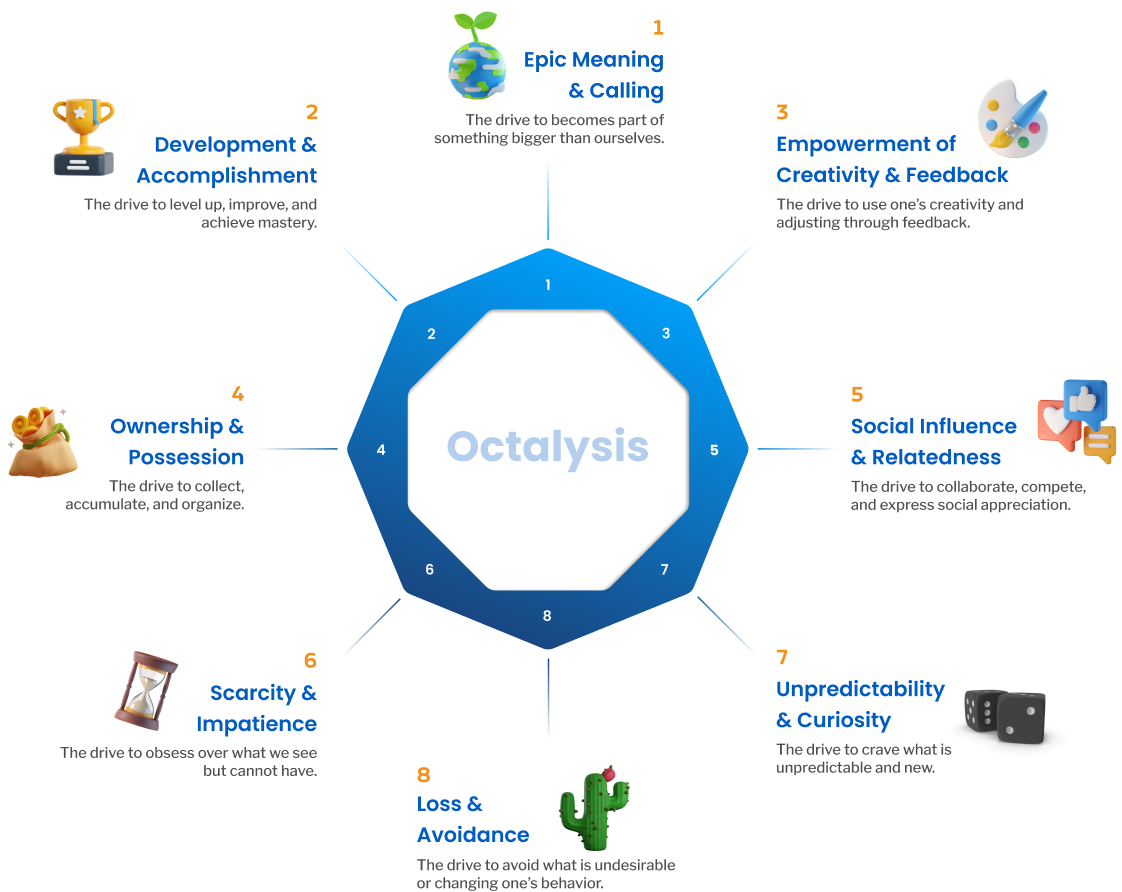
The Octalysis map
Eight core drives behind every engaging system
White Hat · CD1–3
Epic meaning, accomplishment, creativity and feedback
Feels empowering and fulfilling.
In between · CD4–5
Ownership and possession, social influence
Can go either way.
Black Hat · CD6–8
Scarcity, unpredictability, loss and avoidance
Feels urgent, sometimes obsessive.
Framework: Yu-kai Chou, Actionable Gamification (2015) · octalysisgroup.com

White Hat drives
You feel powerful and in control
CD1
Epic Meaning & Calling
“I’m part of something bigger.”
Narratives, missions, a chance to contribute.
e.g. Wikipedia, open-source projects, Duolingo’s free education for everyone
CD2
Development & Accomplishment
“I’m getting better.”
Points, badges, leaderboards, levels.
e.g. Fitbit step badges, LinkedIn profile completion, game trophies
CD3
Empowerment of Creativity & Feedback
“My choices matter.”
Open-ended tools and fast feedback.
e.g. Minecraft, The Sims, Canva
In-between drives
What you own, and who’s watching
CD4
Ownership & Possession
“It’s mine, so I want to grow it.”
Collections, virtual currencies, customisation.
e.g. Pokémon GO, Animal Crossing islands, loyalty stamps
CD5
Social Influence & Relatedness
“Others are helping, watching or competing.”
Sharing, likes, teams, leaderboards.
e.g. Strava, Facebook likes, team multiplayer games

Black Hat drives
Powerful, urgent and risky
CD6
Scarcity & Impatience
“I can’t have it yet.”
Limited offers, exclusive rewards, waiting gates.
e.g. Candy Crush lives, flash sales, invite-only launches
CD7
Unpredictability & Curiosity
“What happens next?”
Random rewards, twists, mystery.
e.g. Loot boxes, gacha games, Tinder swipes
CD8
Loss & Avoidance
“I don’t want to lose this.”
Streaks, countdowns, penalties for inactivity.
e.g. Duolingo streaks, expiring trials, discount timers
They work best in the short term, and burn users out in the long term. This is where the Dark Arts begin.
Done well · 1 of 5
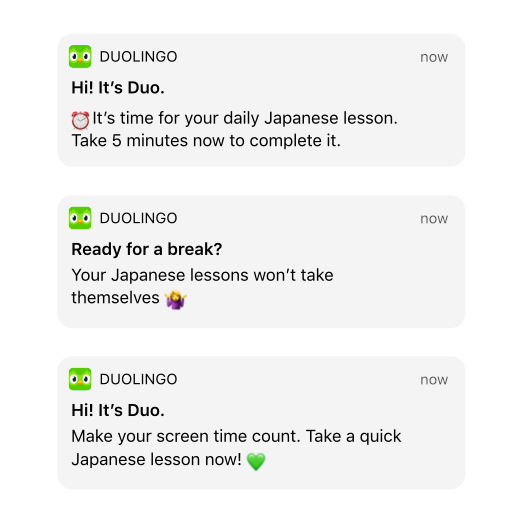
Duolingo
Language learning built like a mobile game.
What it does
Daily streaks with growing rewards
Funny, persistent reminders
Hidden rewards: chests, gems, badges
Lessons tuned to your progress
CD2 White Hat · Accomplishment
CD5 In between · Social
CD7 Black Hat · Unpredictability
CD8 Black Hat · Loss & avoidance
Done well · 2 of 5
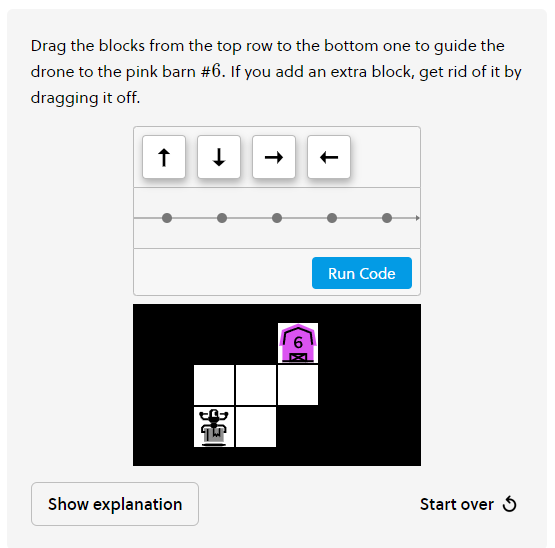
Brilliant
Maths, science and logic through hands-on puzzles.
What it does
Problems split into small interactive chunks
Animated, hands-on modules
A clear map of your course progress
CD2 White Hat · Accomplishment
CD3 White Hat · Creativity & feedback
CD7 Black Hat · Curiosity
Done well · 3 of 5
Khan Academy
Free, world-class education for anyone, anywhere.
What it does
Courses broken into small steps
Progress overview and stats
CD1 White Hat · Epic meaning
CD2 White Hat · Accomplishment
CD5 In between · Social
Done well · 4 of 5
Habitica
Your to-do list, turned into a role-playing game.
What it does
Finish tasks to earn XP, gold and gear
Skip a Daily and your avatar loses health
Parties, guilds and shared boss fights
Core drives
CD2 · WHITE HAT
Accomplishment
CD5 · IN BETWEEN
Social influence
CD8 · BLACK HAT
Loss & avoidance
Done well · 5 of 5
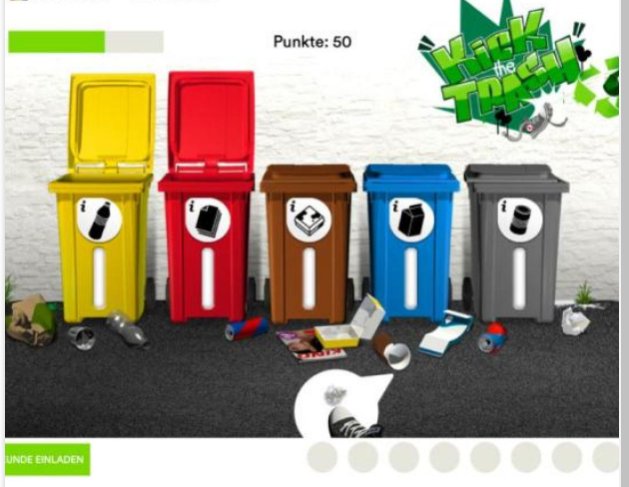
McDonald’s: “Mach keinen Mist”
A 2023 anti-littering campaign inside the German McDonald’s app.
What it does
Mini-game: clear the litter out of a city
The litter includes McDonald’s own packaging
Raises awareness in a light, playful way
CD1 White Hat · Epic meaning
CD2 White Hat · Accomplishment
CD7 Black Hat · Unpredictability
Done well
The common toolkit
Where it goes wrong
The Dark Arts
Same mechanics, different goal: the business wins and the user loses.
The Dark Arts · 1 of 3
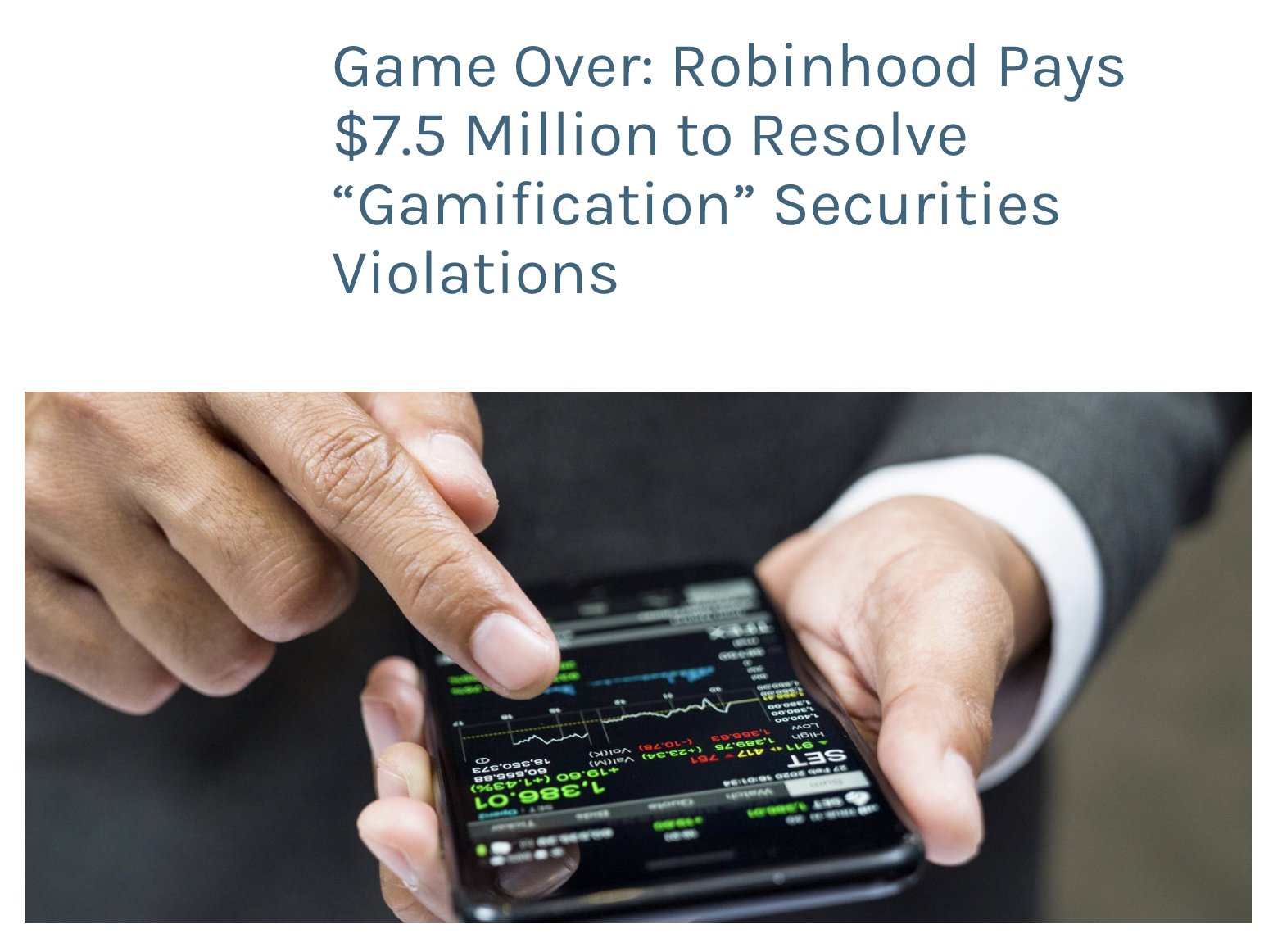
Robinhood: trading as a game
$7.5M
Massachusetts settlement, January 2024
Digital confetti
Trades celebrated like a casino win.
Free-stock lottery
A random free share, revealed like a scratch card.
Nudges to trade more
Push notifications and “top movers” lists.
The Dark Arts · 2 of 3
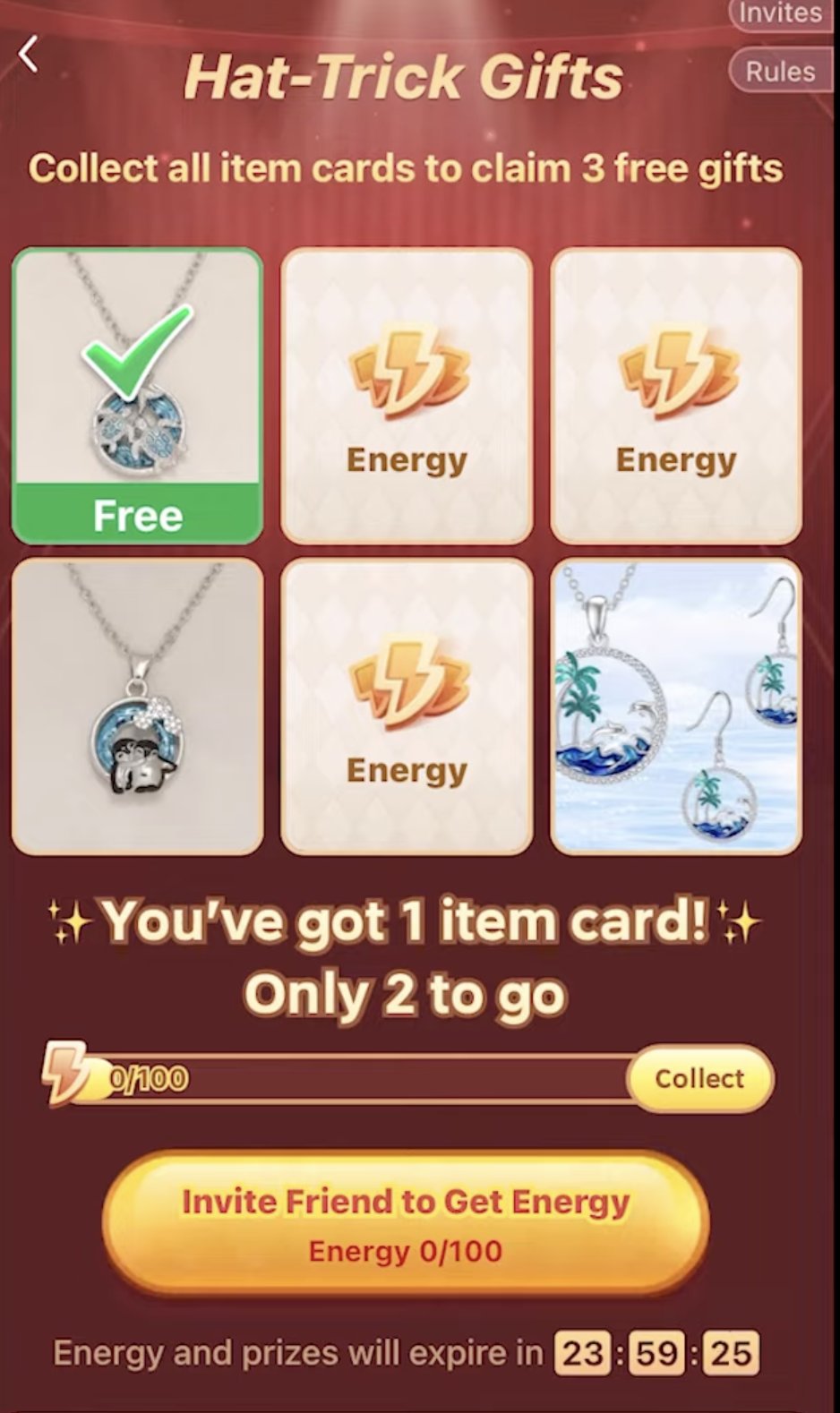
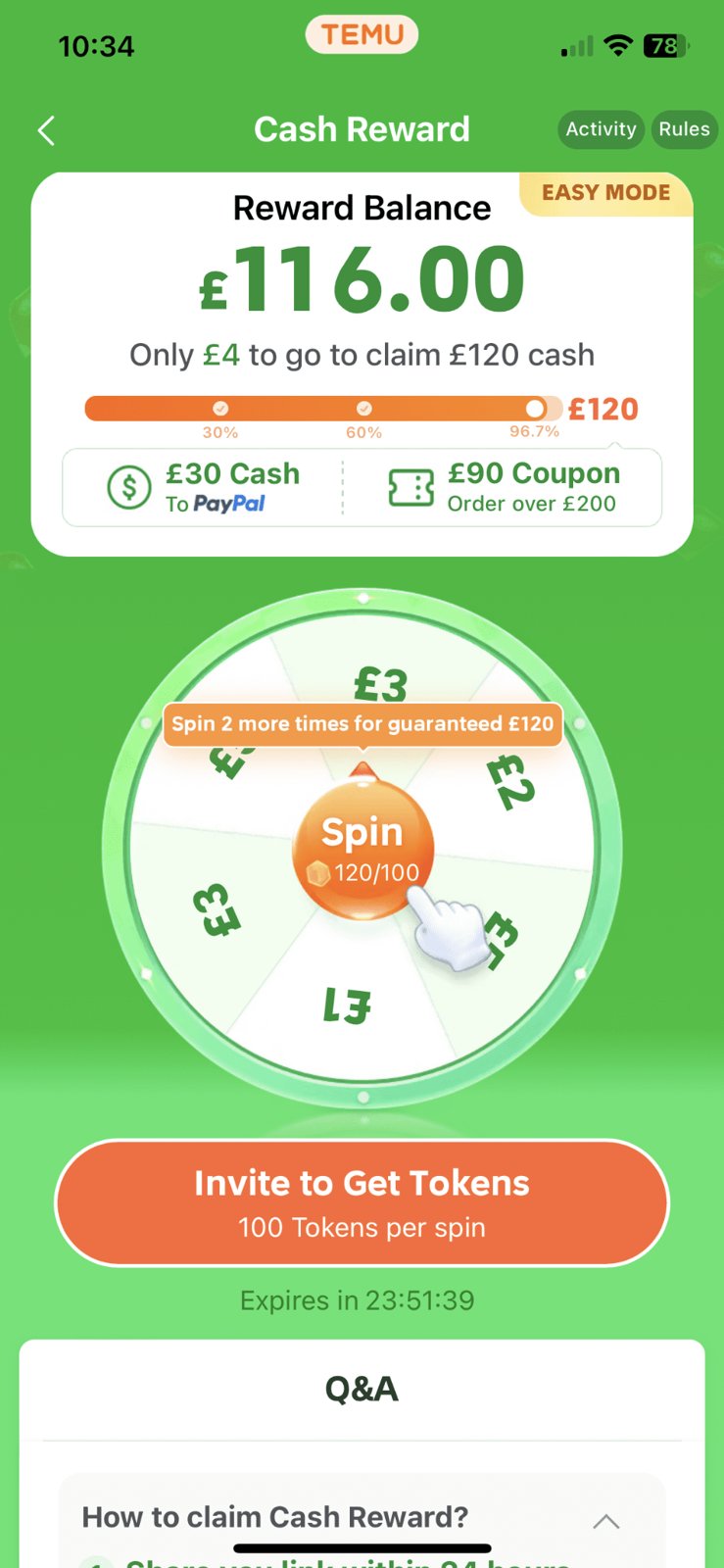
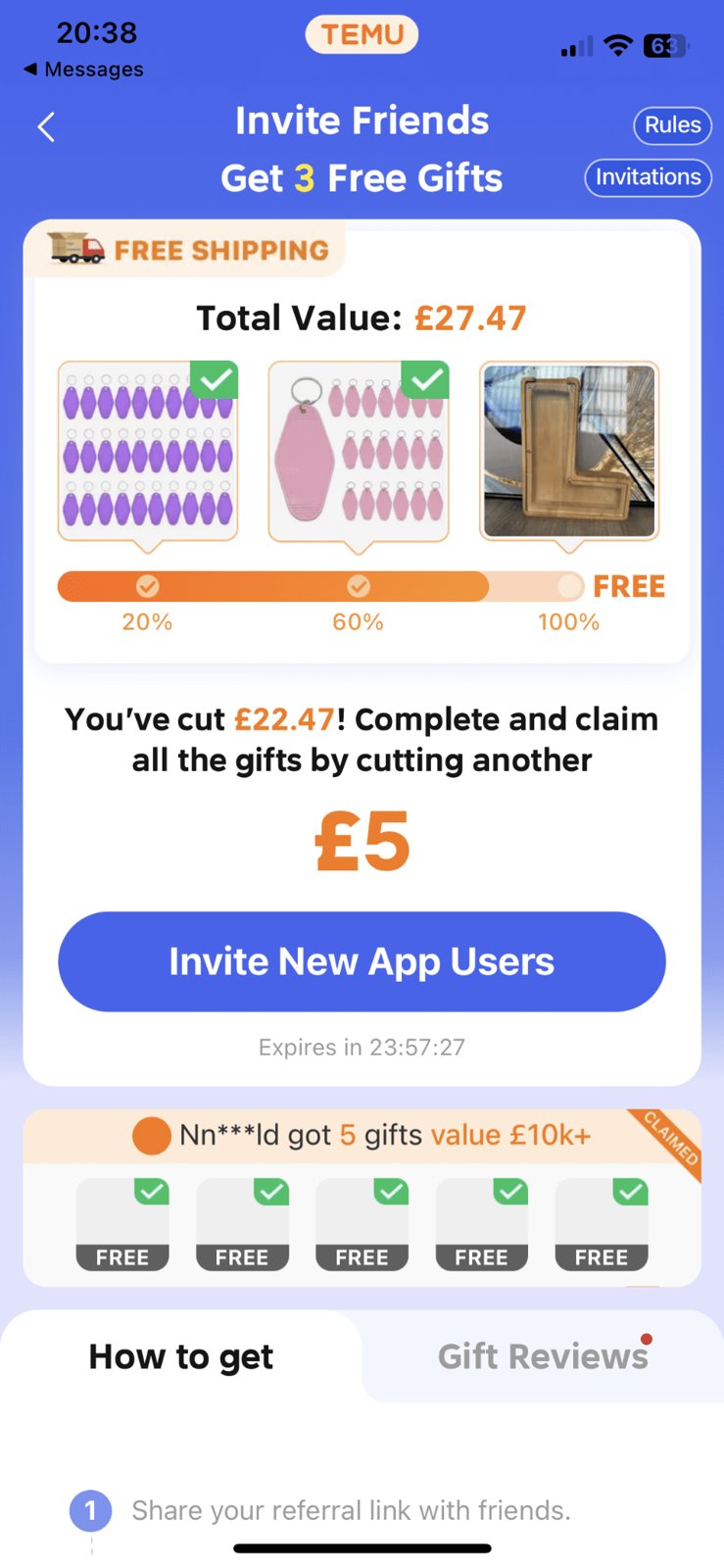
Temu: shopping disguised as a game
In-app games
Fishland and Farmland pay out discounts and “free” items.
Pick your prize first
Choosing the reward up front makes you feel invested.
Invite to continue
Progress stalls until you share, so users become marketers.
“Only 2 to go”
Countdowns and nearly full bars keep you playing.
The Dark Arts · 3 of 3
Uber: gamifying the workforce
The players here aren’t customers. They’re drivers, and the game is their job.
Earnings goals
Log off near a target and the app tells you how close you are.
Forward dispatch
The next ride arrives before this one ends, like autoplay.
Tiers and points
The Uber Pro rewards program (2018) unlocks perks by status.
Badges and ratings
Constant scores that track efficiency and progress.
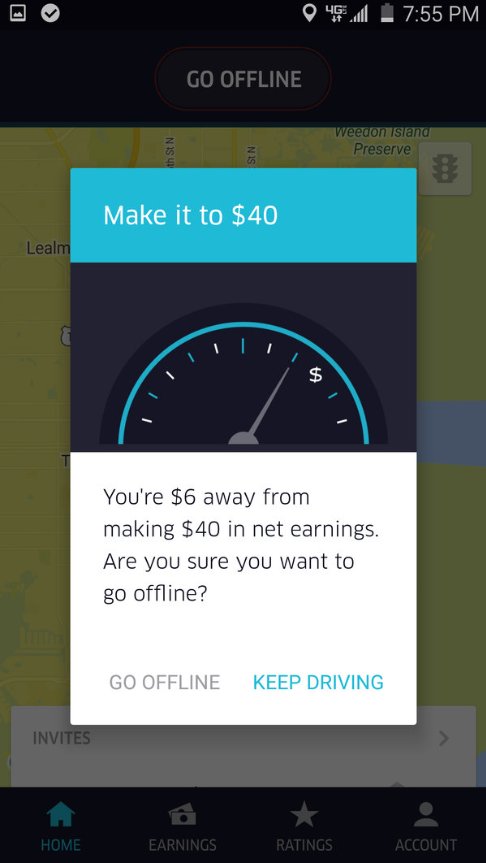
Source: Noam Scheiber, “How Uber Uses Psychological Tricks to Push Its Drivers’ Buttons”, The New York Times, 2017
Intro video
The hardcore gamer’s slot machine
Watch for
Random loot drops
Near-misses
The “one more run” feeling
Behavioural science
Why we act the way we do
Psychology, sociology, economics and more: what we do, and the hidden processes behind it.
Decision-making
How choices are made, and how they can be steered.
Social behaviour
How we act in groups and around others.
Cognitive biases
Systematic thinking errors that make us predictable.
Learning and habits
How rewards and repetition shape what we do.
Behavioural science
Two ways we learn
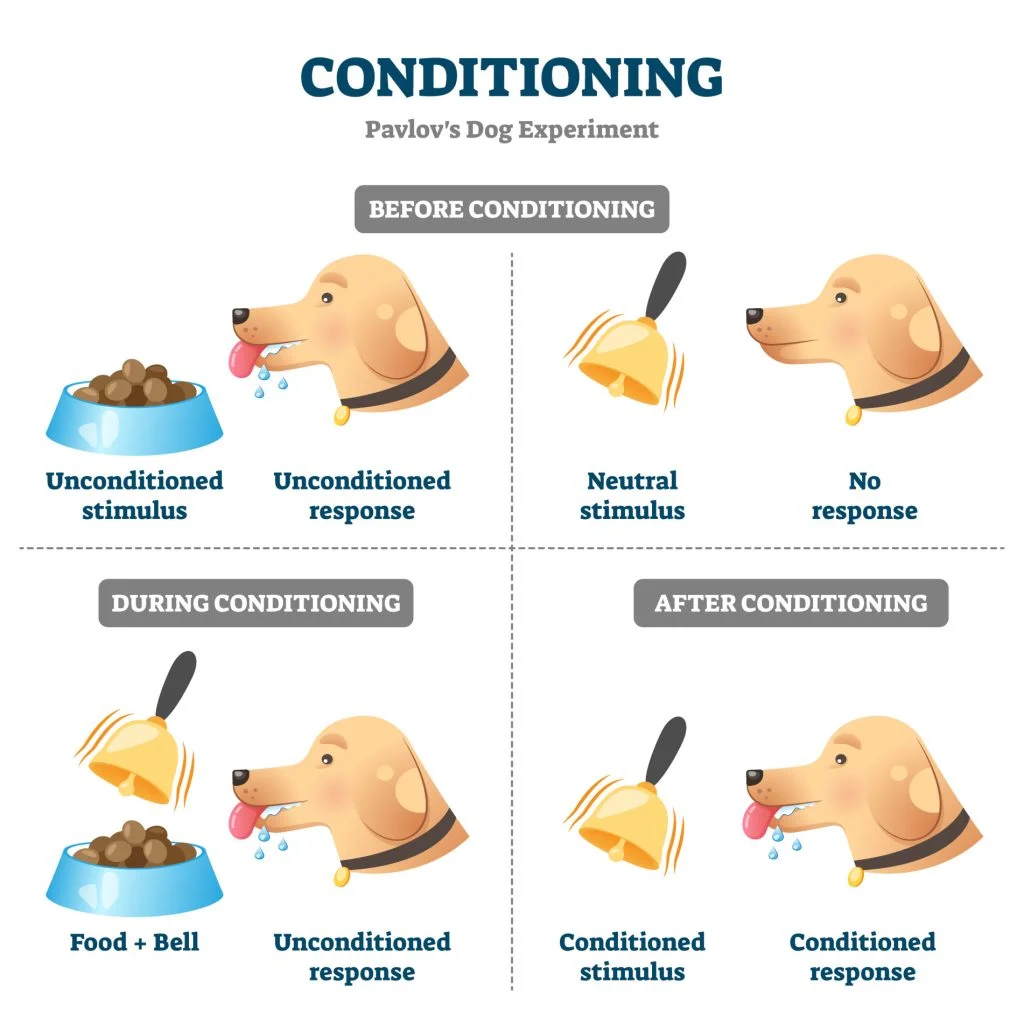
Classical conditioning
Learning by association.
Automatic responses. A neutral signal comes to predict something we already react to.
Operant conditioning
Learning by consequences.
Voluntary actions, made more or less likely by rewards and punishments.
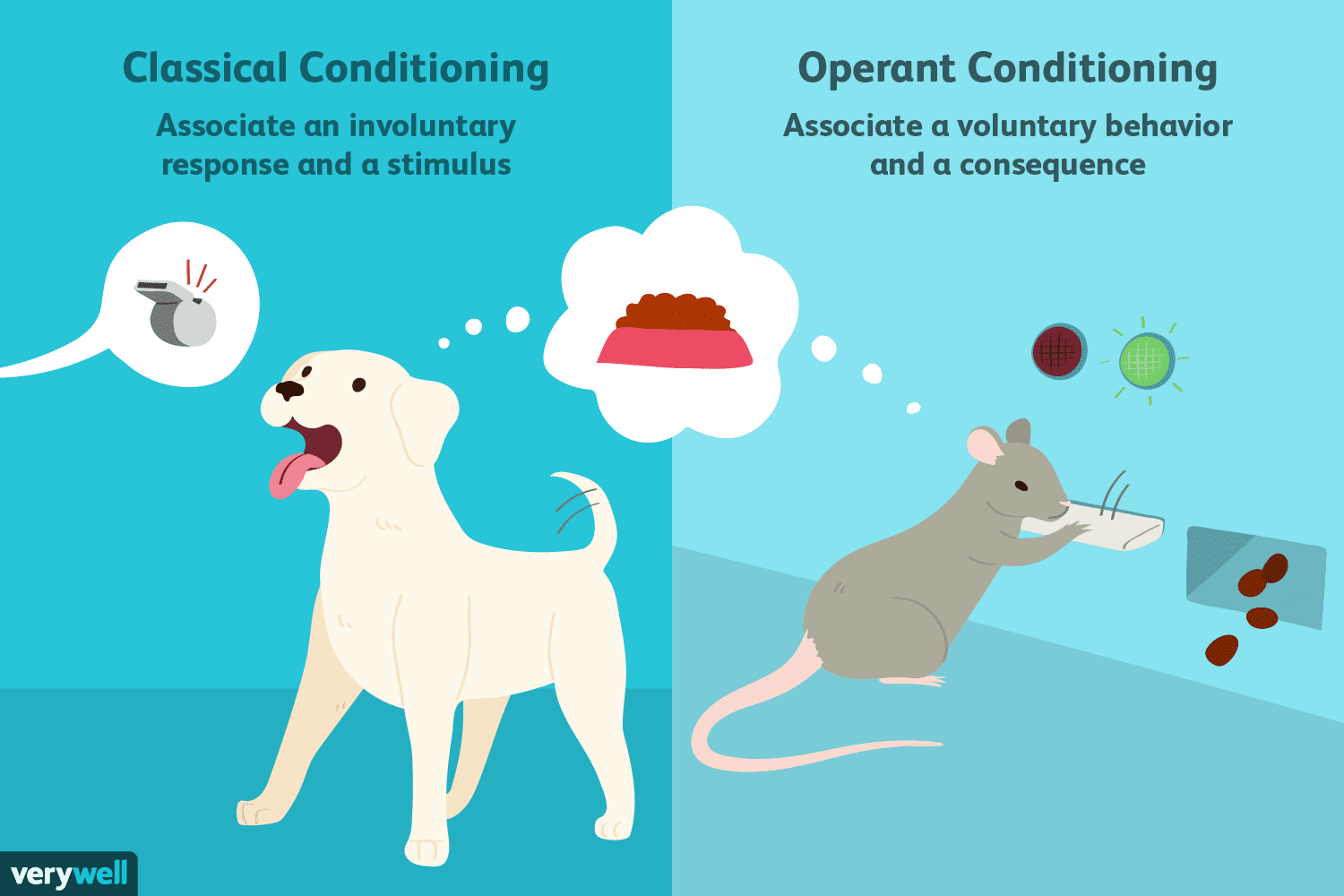
Classical conditioning
Pavlov’s bell
Ring a bell every time food arrives. Soon the bell alone makes the dog drool.
In games and apps
The level-up chime
The loot-drop sparkle
The notification ping
Horror games breaking the cue
Operant conditioning
Skinner’s box: consequences shape behaviour
+ Add something
− Take something away
Reinforcement
behaviour goes up
Positive reinforcement
XP, loot or confetti for finishing a quest.
Negative reinforcement
The nagging reminders stop once you do your lesson.
Punishment
behaviour goes down
Positive punishment
Damage, a fail screen or a penalty.
Negative punishment
Lose your streak, your lives or your items.
Watch out for overjustification: reward something people already enjoy, and they may stop doing it for fun.
Reinforcement schedules
When does the reward come?
Fixed · predictable
Variable · unpredictable
Ratio
after a number of actions
Every 10th coffee free. Crafting, quest rewards.
High rate · pause after reward
Slot machines, loot drops, social feeds.
Highest rate · hardest to quit
Interval
after an amount of time
Daily login rewards, weekly events, cooldowns.
Lowest rate · spikes at the deadline
Pop quizzes, fishing, random encounters.
Steady rate · persistent
Video: “Schedule of reinforcement” · youtu.be/rst7dIQ4hL8
Reinforcement schedules · 1 of 4
Fixed ratio: every 5th action pays
Total actions ↑
Rewards stop
Rewards on
▎ one action ● reward
Time →
Flat steps: a pause after every reward
A burst, then they quit
The rule
A reward after a set number of actions.
Here: every 5th action. You always know how far away the next one is.
In games and apps
Crafting (10 pelts = 1 armour), quest counters, every 10th coffee free.
+ High rate, easy to understand
− Pauses after each reward; stops fast when rewards stop
Reinforcement schedules · 2 of 4
Fixed interval: the clock decides
Total actions ↑
Rewards stop
Rewards on
▎ one action ● reward
Time →
Scallops: slow after a reward, a rush before the timer
Fades out
The rule
The first action after a set time pays.
Here: a fixed timer. Acting early earns nothing, so people wait.
In games and apps
Daily login rewards, weekly events, cooldowns, farming timers.
+ Predictable, good for building habits
− Lowest effort; people leave right after collecting
Reinforcement schedules · 3 of 4
Variable interval: a random wait
Total actions ↑
Rewards stop
Rewards on
▎ one action ● reward
Time →
Slow and steady, no pauses
Keeps checking long after
The rule
The first action after a random wait pays.
Here: anywhere from a short to a long wait. Checking now and then is the best strategy.
In games and apps
Pop quizzes, fishing, random encounters, checking for new messages.
+ Steady, persistent behaviour
− Harder to tune; waiting can frustrate
Reinforcement schedules · 4 of 4
Variable ratio: the slot machine
Total actions ↑
Rewards stop
Rewards on
▎ one action ● reward
Time →
Steepest line, no pauses
Rewards are gone. Still going.
The rule
A random number of actions pays.
Here: about 1 in 5 on average, but you never know which one. The next pull might be it.
In games and apps
Slot machines, loot drops, gacha, social feeds.
+ Highest, most persistent engagement
− Gambling-like; anxiety and compulsion
Reinforcement schedules · Compared
Same time, four rules
Total actions ↑
Rewards stop
Rewards on
Time →
Illustrative curves, after the cumulative records in Ferster & Skinner, Schedules of Reinforcement (1957).
Variable ratio
Most effort, and it never stops
Fixed ratio
Fast bursts, quits when rewards stop
Variable interval
Slow and steady, very persistent
Fixed interval
Least effort, last-minute rush
Under the hood
Why the tricks work
Dopamine is about wanting, not liking
It spikes when a reward is uncertain or better than expected. That’s why variable rewards are so sticky.
Habits
Cue, routine, reward: repeated until automatic.
Evolution
We’re wired to chase scarce resources and status.
Emotions
Urgency, pride and fear override slow thinking.
Perceived control
Feeling in charge keeps us playing.
Dark patterns and biases
Fast and slow thinking
Conditioning trains what we do over time. Biases decide what we pick in the moment.
System 1
Fast
Automatic, effortless, always on. Runs on shortcuts.
e.g. tapping “Accept all”, taking the default, reacting to a red badge
System 2
Slow
Deliberate and effortful. Checks the work, when it has the energy.
e.g. comparing plans, reading the fine print, doing the maths
Biases are System 1’s shortcuts. Dark patterns are built to keep you there: rushed, tired, distracted.
Daniel Kahneman, Thinking, Fast and Slow (2011)
Dark patterns and biases
Dark patterns exploit cognitive biases
Dark patterns
Design tricks that steer you towards what benefits the business, not you.
e.g. hidden costs, forced continuity, confirmshaming, bait and switch
Cognitive biases
Mental shortcuts that make our decisions predictable.
e.g. loss aversion, anchoring, social proof, scarcity
Biases · 1 of 5
Decision-making shortcuts
Choice overload
Too many options and we freeze, or take the default.
In practice: “Most popular” bundles, pre-selected plans.
Illusion of control
Choices that change nothing still feel empowering.
In practice: Dialogue trees with little real impact.
Near-miss effect
Almost winning feels like progress, so we keep going.
In practice: Reels stopping just past the jackpot.
Decoy effect
A worse option makes the target look like a deal.
In practice: Medium popcorn priced almost the same as the large.
Biases · 2 of 5
Attention and perception
Anchoring
The first number we see sets our sense of value.
In practice: A crossed-out €99 next to €29.
Framing
Same facts, different feelings.
In practice: “Only €1 a day” instead of €365 a year.
Salience
Whatever stands out gets chosen.
In practice: A glowing “Buy” beside a grey “No thanks”.
Misdirection
Pull focus to one thing so another goes unnoticed.
In practice: A big “Continue” that also accepts an add-on.
Biases · 3 of 5
Social motivators
Social proof
We copy what others seem to be doing.
In practice: “2,300 people bought this today.”
Reciprocity
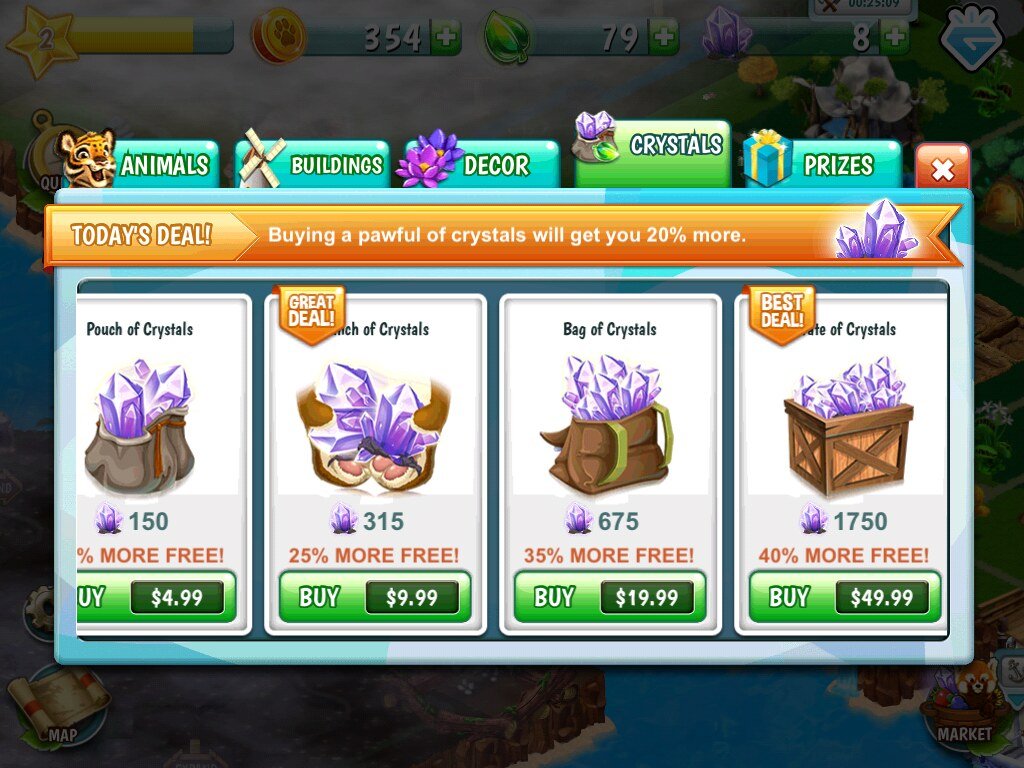
A gift makes us feel we owe something back.
In practice: A friend sends you lives, so you send some back.
IKEA effect
We value what we helped build.
In practice: Custom avatars, bases and playlists.
Bandwagon effect
The more people join, the more we want in.
In practice: Trending lists and viral challenges.
Biases · 4 of 5
Motivation and progress
Endowed progress
A head start makes us more likely to finish.
In practice: A stamp card with two stamps already filled.
Goal gradient
The closer the goal, the harder we push.
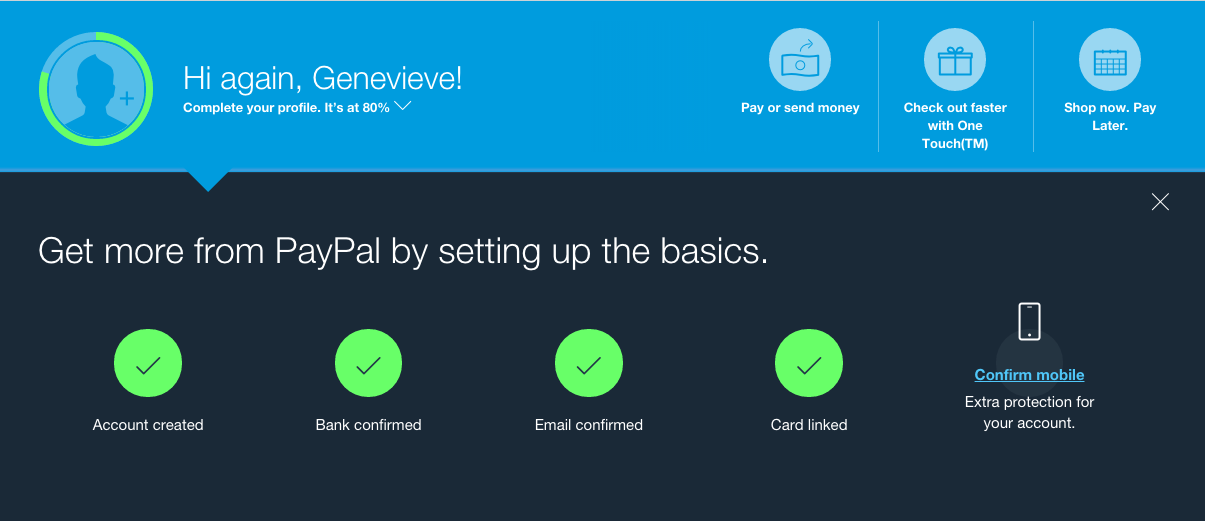
In practice: “Your profile is 90% complete.”
Zeigarnik effect
Unfinished tasks stick in our minds.
In practice: Half-full rings, cliffhangers, red badges.
Expectancy
We try harder when we expect a reward we value.
In practice: Showing the next unlock and what it takes.
Biases · 5 of 5
Scarcity and loss
Fear of missing out
Urgency pushes us to act right now.
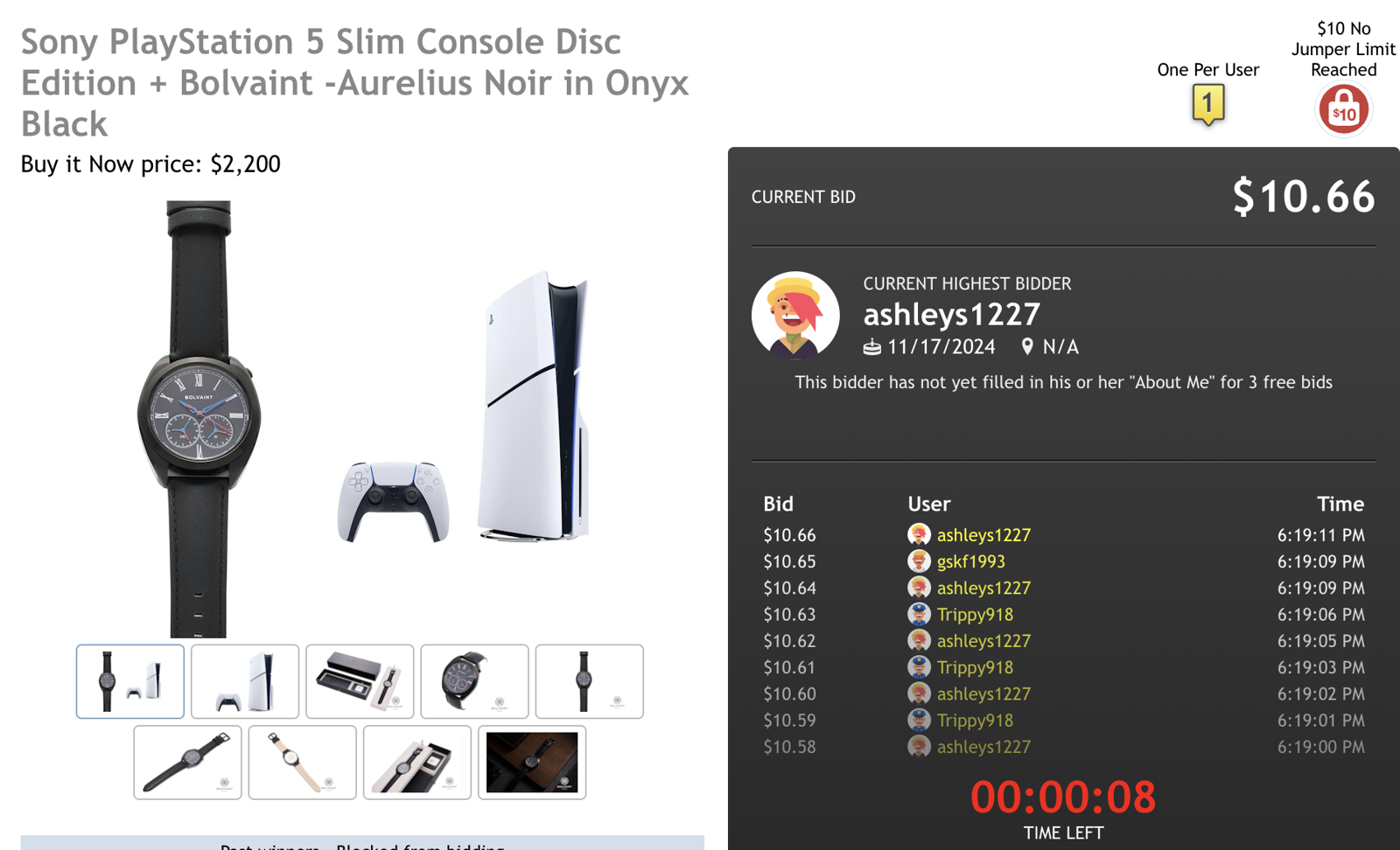
In practice: Limited-time events, countdown timers.
Artificial scarcity
“Limited” makes things feel more valuable.
In practice: Limited-edition skins, “only 3 left”.
Loss aversion
A loss hurts more than an equal gain feels good.
In practice: Streaks, expiring points, status you can lose.
Sunk cost fallacy
We keep going because of what we already spent.
In practice: “You’ve played 200 hours, don’t quit now.”
Dark patterns
Six tricks to recognise
Bait and switch
A “free” feature turns premium after you sign up.
Disguised ads
Ads dressed up as content or a “Download” button.
Forced continuity
Free trials that quietly roll into paid plans.
Hidden costs
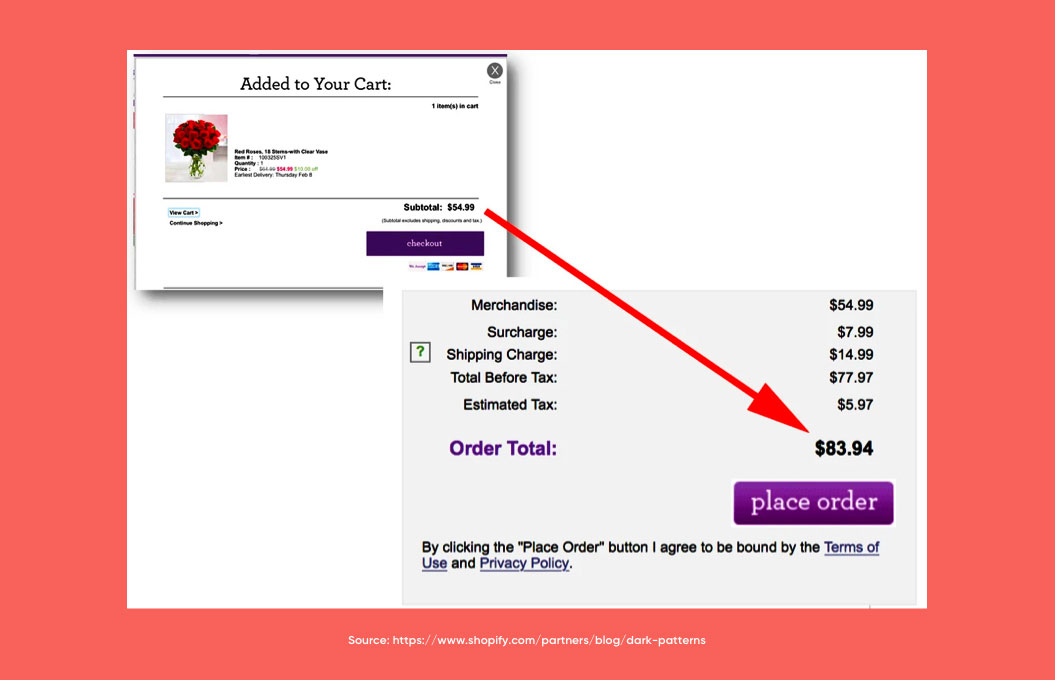
Fees that only appear at the last checkout step.
Confirmshaming
“No thanks, I don’t like saving money.”
Infinite scroll
No natural stopping point, so you never decide to stop.
Take-home task
Spot the Dark Arts
STEP 1
Open an app you use every day.
STEP 2
Find two tricks from today’s lecture.
STEP 3
Name the bias each one targets.
Ethics
Ethics of persuasive technology
Ethical outcome
Don’t aim for results that would be wrong without the tech.
Ethical motives
The reasons behind the design must hold up too.
Responsibility
Creators own the outcomes they could predict.
Privacy
Treat users’ data as carefully as your own.
Disclosure
Be open about who benefits and how.
Accuracy
Never persuade with false information.
Golden rule: never try to persuade people of something you wouldn’t want to be persuaded of yourself.
Berdichevsky & Neuenschwander (1999), “Toward an Ethics of Persuasive Technology”, Communications of the ACM 42(5)
Ethics
Regulators are catching up
2018
Belgium
Gaming Commission rules paid loot boxes are illegal gambling.
2022
FTC vs Epic Games
$245M in refunds over dark patterns in Fortnite.
2024
Robinhood
$7.5M Massachusetts settlement over gamified trading.
2024
EU Digital Services Act
Article 25 bans dark patterns on online platforms.
2025
FTC vs HoYoverse
$20M over Genshin Impact loot boxes; no sales to under-16s without parental consent.
Ethics
Would your users thank you later?
Does it serve the user’s own goal, not just your metric?
Can they stop, cancel or leave as easily as they joined?
Are odds, prices and costs visible up front?
Would you be fine with users seeing exactly how it works?
Lead with White Hat drives; use Black Hat ones briefly and openly.
Level complete
Four things to take home
1
Gamification is motivation design, not just points and badges.
2
The same mechanics can empower or exploit. The goal decides which.
3
Random rewards, loss and scarcity are the strongest levers, and the riskiest.
4
You can use all of this on your own work, projects and habits.
Game over · thanks for playing
Questions?


Biases · 3 of 5
Social motivators
Social proof
We copy what others seem to be doing.
In practice: “2,300 people bought this today.”
Reciprocity
A gift makes us feel we owe something back.
In practice: A friend sends you lives, so you send some back.
IKEA effect
We value what we helped build.
In practice: Custom avatars, bases and playlists.
Bandwagon effect
The more people join, the more we want in.
In practice: Trending lists and viral challenges.